
Punch biopsy
The Equipment
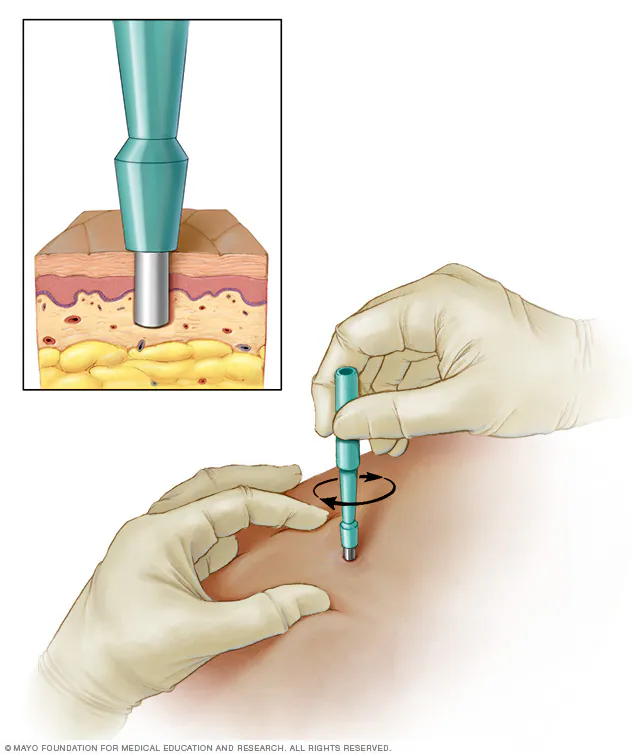
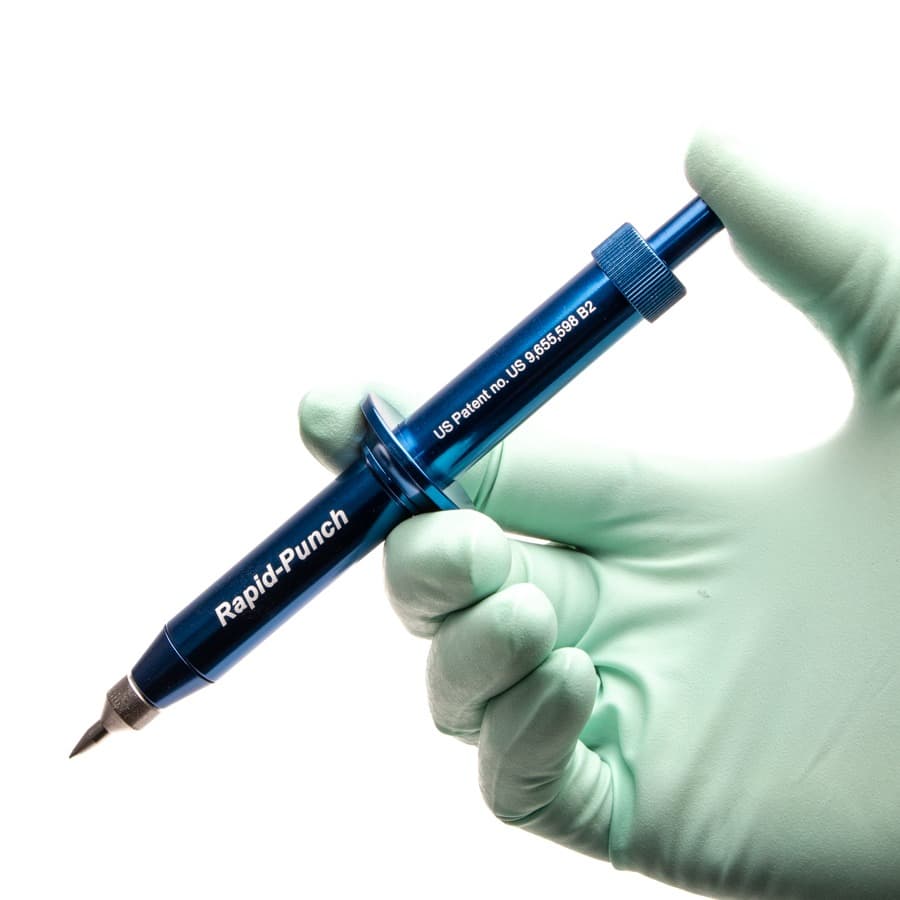
A punch biopsy uses a small, circular cutting device that resembles a tiny apple corer or cookie cutter. This tool is designed to remove a cylindrical sample of breast tissue, including layers of skin and underlying tissue.
The procedure also requires local anesthetic, sterile dressings, and sometimes a paper stitch or waterproof dressing for wound closure.
Summary
This type of biopsy is performed when there is a rash or reddened area of the breast skin that is determined not to be associated with mastitis (a breast infection usually associated with breastfeeding) or dermatitis (an allergic reaction to things like soap, detergent, or perfume).
In a skin punch biopsy, a tiny device that resembles a cookie cutter is used to remove a very small sample of breast skin and the tissue immediately under the skin.
Please see below for details on the procedure, preparation, risks & benefits.
What is it
A punch biopsy is a diagnostic procedure used to obtain a small, cylindrical sample of breast tissue for examination. It's particularly useful for superficial breast lesions with dermal involvement, suspected Paget's disease, skin discoloration, or nodules in the breast skin or surgical scars.
This technique is widely used in dermatology and has been adapted for use in breast clinics as a valuable adjunct to conventional methods like core biopsies and fine needle aspiration cytology.
Punch biopsies are especially useful for diagnosing rare forms of breast cancer such as inflammatory breast cancer, which affects the skin.
How to prepare
Before the procedure, inform your doctor about any medications you're taking, especially blood thinners, as these may need to be temporarily stopped.
No special preparation is typically required. You may be asked to remove clothing from the waist up and wear a hospital gown.
If you have any allergies, particularly to local anesthetics, make sure to tell your healthcare provider beforehand.
How the test is performed
The area to be biopsied is cleaned with an antiseptic solution. Local anesthetic is then injected to numb the area, which may cause a brief stinging sensation.
Once the area is numb, the doctor uses the punch biopsy tool to remove a small, circular sample of skin and underlying tissue. You may feel some pressure, but it shouldn't be painful.
After the sample is taken, the doctor applies pressure to the site to control any bleeding. The wound may be closed with a paper stitch or a small waterproof dressing.
The entire procedure usually takes about 10-15 minutes.
What it feels like
You'll feel a slight prick when the local anesthetic is injected. This may sting briefly but quickly numbs the area.
During the biopsy, you might feel some pressure as the punch tool is applied, but it shouldn't be painful. If you experience any pain, let your doctor know immediately.
After the procedure, the biopsy site may feel tender for a day or two, but severe pain is uncommon.
Getting results
The tissue sample is sent to a laboratory for analysis by a pathologist. Results are typically available within a few days to a week.
Your doctor will contact you to discuss the results. They will explain what the findings mean for your diagnosis and any next steps that may be needed.
If the results are inconclusive or if cancer is detected, additional tests or biopsies may be recommended.
Risks
Punch biopsy is generally a safe procedure with minimal risks. However, potential complications can include:
Bleeding or bruising at the biopsy site. This is usually minor and can be controlled with direct pressure.
Infection, although this is rare if proper sterile technique is used.
Scarring at the biopsy site, which is typically small and fades over time.
As with any biopsy, there's a small risk of false negative results, meaning the biopsy might miss abnormal cells that are present.
The Equipment
A punch biopsy uses a small, circular cutting device that resembles a tiny apple corer or cookie cutter. This tool is designed to remove a cylindrical sample of breast tissue, including layers of skin and underlying tissue.
The procedure also requires local anesthetic, sterile dressings, and sometimes a paper stitch or waterproof dressing for wound closure.
Let Us Help You Prepare For Your Scan
We do the leg work of assembling scan information from your test facility and other reputable sources to give women a complete picture.
For More Information About Punch biopsy
National Breast Cancer Foundation, Inc.
Phone: 972-248-9200
Phone: 800-227.-2345
U.S. Department of Health and Human Services - Office on Women's Health
Phone: 800-994-9662